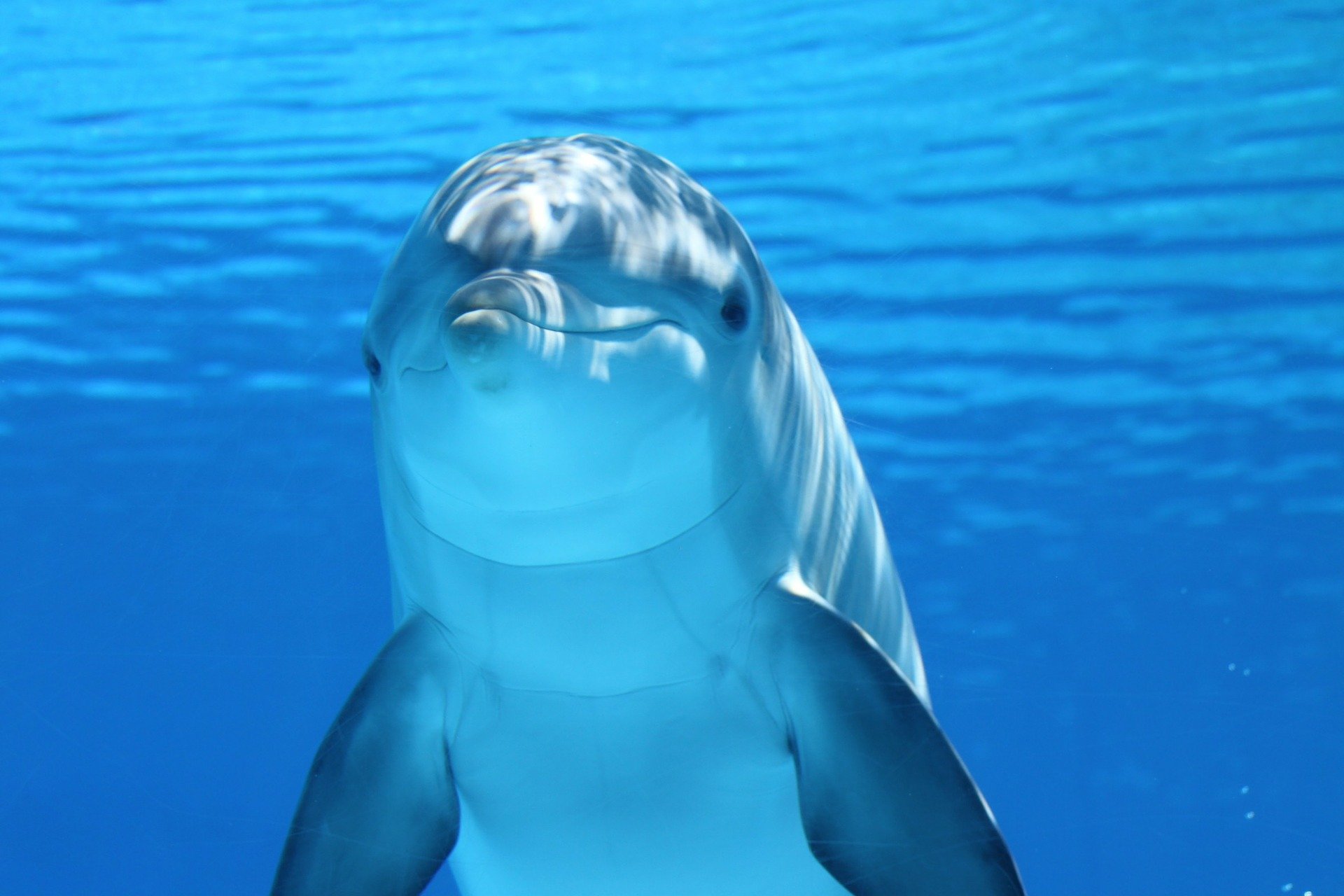
I’m conducting an ethnographic research on dolphins by writing an autoethnography: an approach where the ethnographer writes about their personal experience and connects it to wider social topics.
My virtual field site is the Dolphin Research Center (DRC) Facebook page, where the organization is recently posting live streams where a lot of interactions are happening between the cameraman and dolphins, cameraman and people watching the live stream, the comment section… I want to explore the blurry line between education and entertainment in dolphins as well.
In addition to writing, I will incorporate my creative practice later on.
Field Site Proposal
I propose my field site to be the Dolphin Research Center Facebook page, where they currently hold 162,734 followers and are active every day. This nonprofit organization promotes a peaceful coexistence between marine animals, humans, and the environment we share through education, research and rescue (dolphins.org). One year ago, they started making live streams on Facebook that attracted many online interactions, interests, and even donations to their organization.
After reading Silverblatt et al., I concluded some qualities of these live streams from a production perspective. They are in first-person point of views where the cameraman shows you what he sees, occasionally turns the lens to himself and talks directly to the audience. It is interactive when he chooses a viewer’s live comment and responds to it. He also says “hello” to viewers in the chat whom he’s familiar with, usually staff members. The rhythm of the video is generally slow, and it always goes in a linear direction where the viewer can follow when/where it starts and ends. The flow depends on the cameraman, who is also the director, he can choose to walk along slowly around the facility and tell stories, or visit more places and converse with people on site. But they will always show you the dolphins – they have 25 bottlenose dolphins and 1 Atlantic spotted dolphin reside at its facilities.
In Raffles’s Insectopedia, he writes with people speaking in their own words. One of the advantages of virtual research is that I can watch it more than once to note what people said and how they said it. I can watch it with different focuses each time – sound, clothing, language, etc. – and note them down with thick descriptions. One way to interact with them is to comment with a question, but this is passive as it’s up to him to respond or not. A better way might be to email one staff member that I developed an interest in after watching his/her video and conduct a virtual interview or email exchange. As O’Reilly points out in “Virtual Ethnography”, “some people find it easier to be intimate in virtual rather than face-to-face settings”, so hopefully they will open up to me about what their relationship is like with dolphins(4). O’Reilly also suggests tapping into lurkers(people who don’t participate) and consider what their roles are in this community(4). This prompted me to notice the several other “reactions” that people do on a Facebook post: care, love, like, and share. I can click on each of them and see who the participants are. I can also see their Facebook pages to learn more about them. Maybe I can ask them about their relationship with dolphins.
Drawing from my personal experiences with dolphins, I’ve only seen them in aquariums: as educational and entertaining subjects. I just recently found out that my little sister(she’s eight) has seen dolphins at a beach when I was in New York. I asked which one she preferred, seeing dolphins at the aquarium or ocean. To recall her exact response: “Duh! Of course ocean! In aquariums you just tap on the window and see they swim. In the ocean, they are wild and free!” I was relieved when she said that, especially the “wild and free” part, I think somewhere under that sentence is the dislike of dolphins tricks and shows. There is a fine line between education and entertainment. In DRC’s videos, you can always see kids joining some kind of interactive program to play with the dolphins in water. I want to observe what conversations are taking place during those play sessions, can I distinguish between an educational and an entertainment act? What is the facilitator saying to his/her guests on the deck? Are the dolphins doing tricks? If so, are they necessary under the circumstance? To explore these questions, I thought of bringing in my little sister’s perspective as she’s learning about animals at school (so far, she’s learned about frogs and bats in depth). I will watch a live stream with her and ask for her opinion.
I also wonder why dolphins are such an inspiration for people? I see countless comments saying how they were able to fight their diseases because of the dolphins, and I don’t think I see this a lot in other wild animals (I’ll do research). I will attempt to explore what’s so unique about dolphins that it became a symbol of happiness and inspiration.